Why it matters
Risk has known probabilities in this comparison; ambiguity leaves them unknown. The distinction helps unpack why similar-looking choices feel different.
A worked example
One game offers a known 50% chance of £100. Another offers £100 with an unknown chance. Preferring the known chance can illustrate ambiguity aversion.
Illustrative example · simplified assumptionsA common mistake
Assuming unknown probabilities necessarily mean worse odds.
Where the idea needs care
An unknown probability does not tell us that the expected payoff is lower.
Apply the idea
Explain this concept using a different example from your spending, work, business or a policy debate. State what stays fixed and what could change the result.
See the supporting infographic
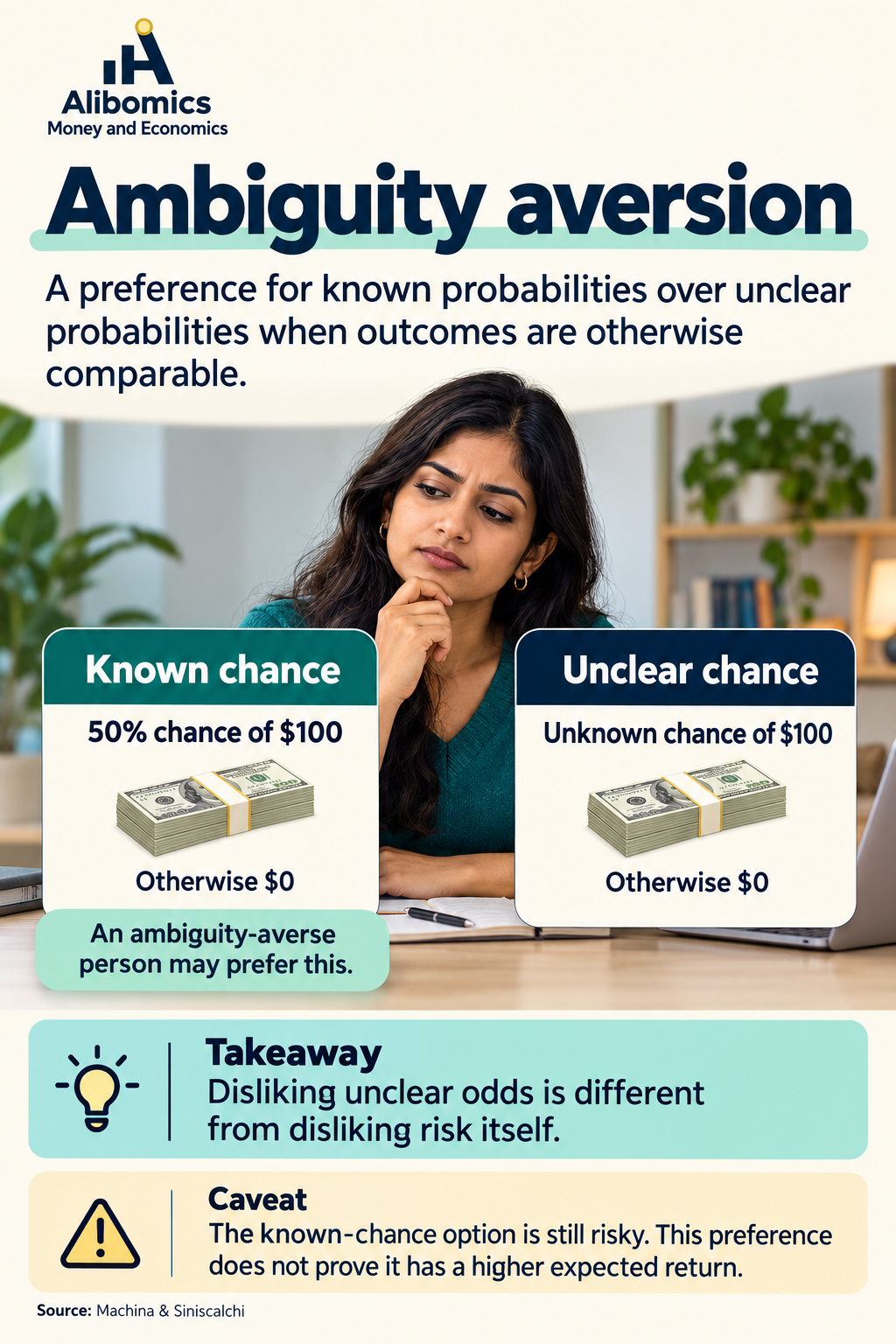
The written explanation above is the main lesson. This image offers another way to remember it.
Sources and further study
Examples and explanations by Alibomics. Numeric illustrations are not current market quotations.