
Why it matters
Growth depends on multiplication across periods. Gains and losses of equal percentages do not cancel when they apply to different balances.
A worked example
£100 grows by 20% to £120, then falls by 20% to £96. The two-period geometric average is √0.96 − 1 ≈ −2.02%.
Illustrative example · simplified assumptionsA common mistake
Adding periodic returns to predict the final balance.
Where the idea needs care
The arithmetic average here is 0%, despite the loss. This example assumes no cash added or withdrawn.
Apply the idea
Explain this concept using a different example from your spending, work, business or a policy debate. State what stays fixed and what could change the result.
See the supporting infographic
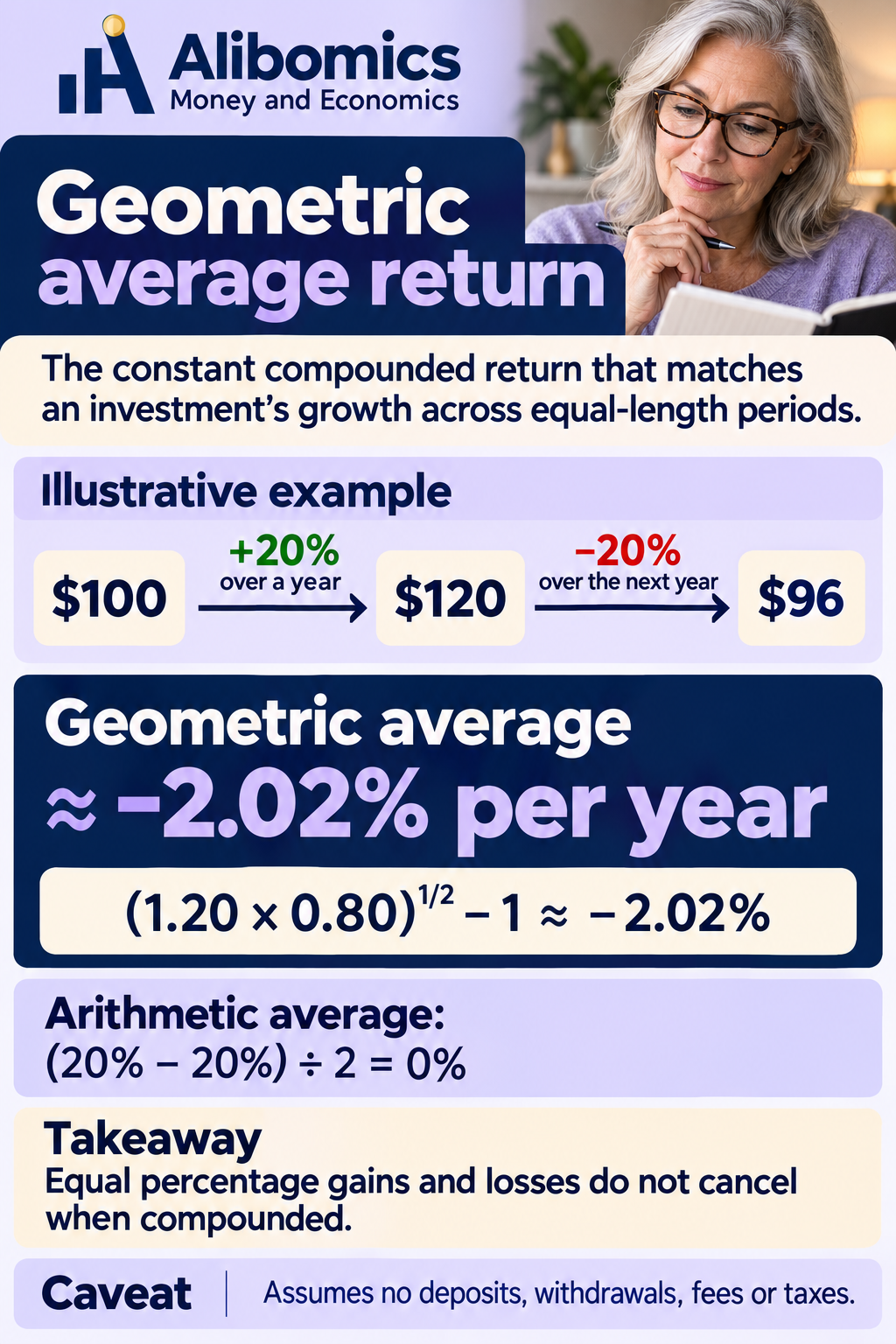
The written explanation above is the main lesson. This image offers another way to remember it.
Sources and further study
Examples and explanations by Alibomics. Numeric illustrations are not current market quotations.