
Why it matters
A private decision can leave part of its cost with other people. Recognising that gap helps explain why market prices sometimes omit important consequences.
A worked example
A factory’s output creates noise for neighbours. Its production accounts may include wages and materials but not the neighbours’ disturbance.
Illustrative example · simplified assumptionsA common mistake
Assuming private profitability proves the activity benefits society overall.
Where the idea needs care
Not every unwanted outcome is an externality. The uncompensated effect on others is central.
Apply the idea
Explain this concept using a different example from your spending, work, business or a policy debate. State what stays fixed and what could change the result.
See the supporting infographic
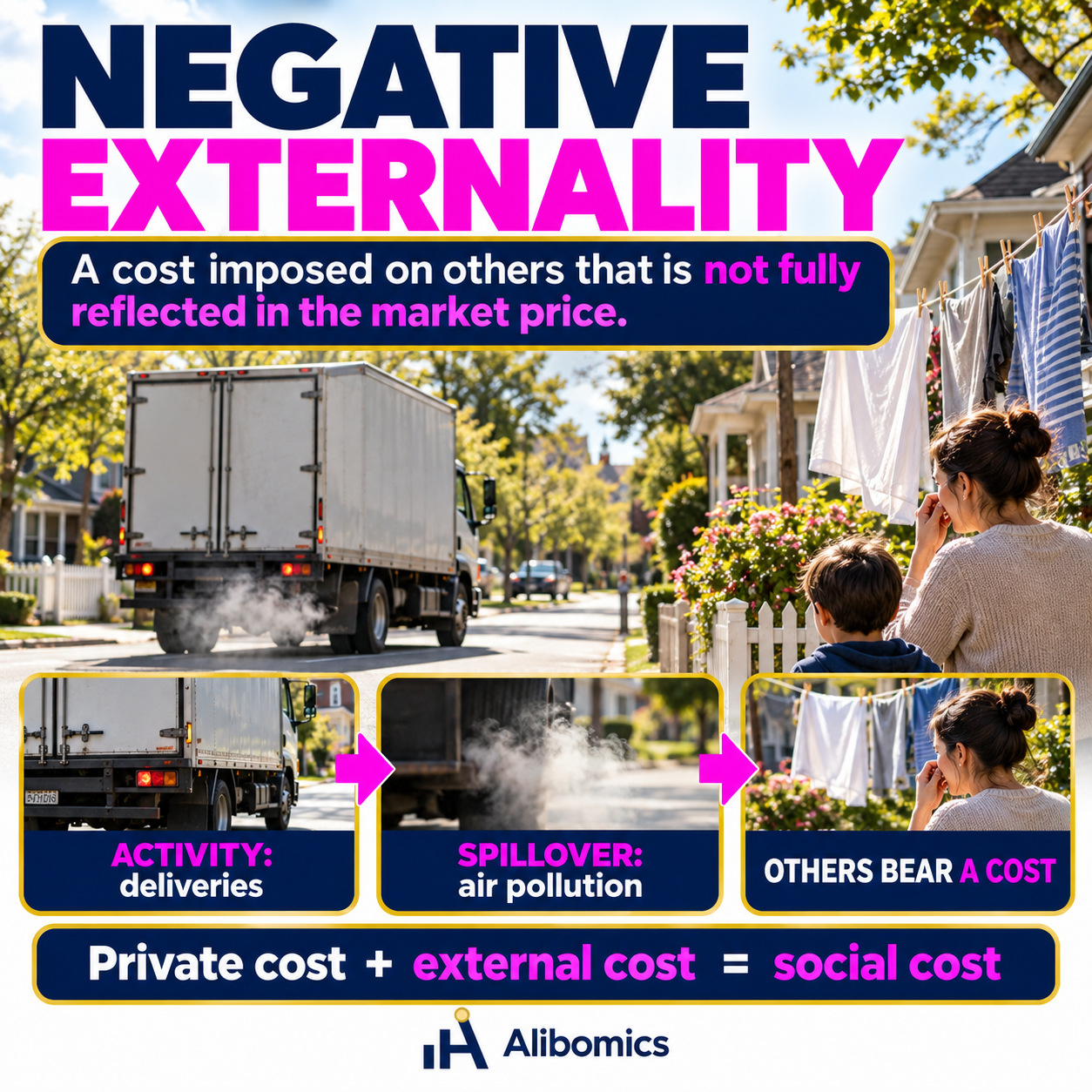
The written explanation above is the main lesson. This image offers another way to remember it.
Sources and further study
Examples and explanations by Alibomics. Numeric illustrations are not current market quotations.